
Chapter 29 | The Handbook
You Will Be Found

While you hit the submit button, beginning the I hope not too excruciating wait, I’ll leave you with a few thoughts on what’s ahead.
Colleges want you to succeed. The one you attend will do everything in its power to make that happen. All you’ll need to bring is effort, an open mind, and a watchful eye. Take yes for an answer. You are sure to have a slew of triumphs and your fair share of face plants. So long as you can avoid one of those spectacular blunders that comes with a lifetime price tag, you’ll survive them all, and be better for it. Just remember the importance of kindness and you’ll steer clear of the worst mishaps.
Those students whose stories you read a few chapters back have departed like those tiny turtle hatchlings on the Great Barrier Reef. They’re all doing swimmingly, by the way. A few have reported back from campuses across the globe, keeping me up on the trends.
The most persistent one is that perennial worry so many freshman battle— imposter syndrome. My students from south LA get to college and, for the first time in their lives, are surrounded by wealthy classmates from fancy private schools with whom they have zero shared life experience. They fear they don’t belong among their more sophisticated counterparts. It doesn’t take long before they’re asking themselves if they made some terrible mistake.
The experience is not confined to those less affluent. Plenty of well-off kids have doubts too. Everyone else seems so confident, well adjusted, and socially adept. Am I the only one who has no idea what I’m doing?
Give it time. Be kind to yourself.
I make a deal with my counselees before they head off to college. I get them to promise one thing— that if they ever find themselves struggling, academically or emotionally, they will reach out for the help which is all around them. Wanting to avoid appearing helpless, students will sometimes ignore warning signs of loneliness and overload. There is nothing cool, nothing admirable about struggling in silence, I tell them. Ask the classmate who needs to spend a semester on bed rest. You have family who will understand if you need advice or reassurance. You will have a gaggle of good advisors assigned to you and a skilled therapist just over at the health center. Find your voice. Raise your hand. Get what’s coming to you, what you need. It’s early in your college years you will be most vulnerable. No one will think less of you for seeking help. It’s unlikely anyone will even notice.
Would you, dear reader, consider a similar agreement? (Outstretched hand goes here . . . 🤝)
If I could wave a wand and change one thing, I’d convince you to care less about what others think of you. Not not at all, just less. You would see that everyone struggles with the newness of things. You wouldn't judge yourself so harshly. When you stumbled, you would get up and be able to laugh at yourself. If someone called you clumsy, you’d own it without shame and shake it off. You wouldn’t feel the need to curate an idealized version of yourself online when your reality contradicted it. You’d call out gossip at another’s expense and have no appetite for it. You’d stand up to bullies and condemn their cruelty. You’d see through the false bravery of sycophants and defend those who suffered at their hand. You would befriend the lonely and save your most generous attention for those most marginalized. You would be kind. So kind.
You would be the best, most realized version of yourself.
You wouldn’t be ashamed of not knowing things. Most everything, in fact. You would raise your hand and ask why and keep asking until you got a good answer, even when those around you stared and whispered. You’d care more about understanding than appearing smart. You would try things for which you showed no obvious talent. You wouldn’t fear looking foolish. You’d be okay with being the absolute worst Lady Macbeth in a table read maybe in history. Then you would work at it relentlessly for months until you delivered the most memorable portrayal anyone could remember.
People would say I don't know how you do it. You would say me neither.
You would shrug it off and laugh. Because you would have done it for the simple joy of it and nothing else. Certainly not to impress anyone. People would be drawn to you. They would want to be like you. People would love you, in fact. People like you are rare.
Eventually you would find the thing you truly love to do, the thing you were meant to do. Because you were fearless all along. You would stumble upon it totally by accident and discover you have a gift. And it all would have started by not having given a solitary fig what anybody else thought about it.
The whispering would stop. But occasionally people would still stare.
Because you’re altogether awesome.
~
It’s stunning how obvious things are looking back on them. At our 25th college reunion I had 100 conversations about freshman year, many dealing with how absolutely lost everyone felt in those first tender months of fall. So, if when you get to college you feel clueless, please don’t assume you’re alone in your bewilderment. There’s plenty of that to go around.
College is a time of discovery, changing you in profound ways. Identities are still forming, personalities still fluid. In a community of new and powerful voices, the impressionable among us, by which I mean all of us, will try on versions of ourselves until we find something that fits. Some outfits will, of course, look absolutely ludicrous. And the one you go with will most likely be very much like the one you had on when you walked in.
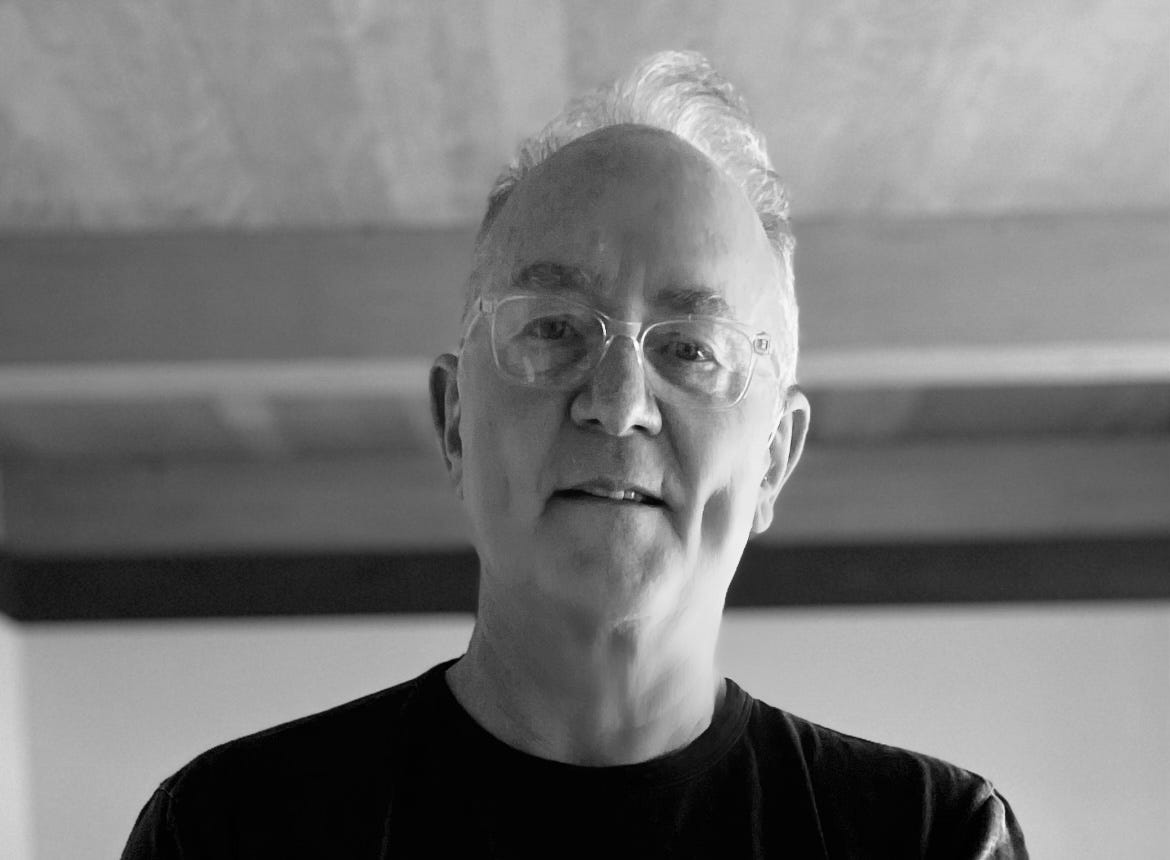
I had a friend in college who was blindingly bright and had bulletproof confidence. He also had a murderous dislike for anything idealistic, a fatalist with a voracious appetite for drugs and rock climbing. While I declined some of the drugs, I happily partook of the other pursuit.
His mind was like an industrial combine— slashing through acres of arguments and spitting out the residue. He was ungenerous towards anyone he suspected of being sentimental in their thinking or judgmental of his hedonism. He disparaged nearly everyone, but somehow not me. I was taken in by his attention.
I can’t remember the exact circumstances, but soon thereafter I felt disgusted with myself for participating in his cruelty. I created some distance between us. When I ran into him years later, we played at our previous closeness but neither of us could pull it off. That was the last I saw him.
His cynicism wasn’t a good fit for me.
I don’t know where you fall on the hope/cynicism spectrum but I dearly hope you safeguard whatever store of hope you have. It’s tempting to give over to nihilistic views sometimes. You’re never disappointed when you expect nothing. But years later you may find, as I have, that the only real satisfaction that life holds requires that you pay at the door with your belief in goodness, in people, in art. Nick Cave, the Australian singer, writer, and actor put it better than I ever could.
Unlike cynicism, hopefulness is hard-earned, makes demands upon us, and can often feel like the most indefensible and lonely place on Earth. Hopefulness is not a neutral position — it is adversarial. It is the warrior emotion that can lay waste to cynicism. Each redemptive or loving act, as small as you like — such as reading to your little boy, or showing him a thing you love, or singing him a song, or putting on his shoes, keeps the devil down in the hole. It says the world and its inhabitants have value and are worth defending. It says the world is worth believing in. In time, we come to find that this is so.
The world is worth believing in. The world is in an ungenerous mood at present so if you believe in it too, prepare to defend your position often.
I swore I wouldn’t stoop to offering tired words of wisdom and yet I may have done just that. I won’t apologize, I’m a sap and always have been. I don’t think I’ve ever delivered a toast when my voice didn’t crack and I didn’t have to pause, chin to chest, and catch my breath lest I start blubbering. Last I heard, they can’t put you in jail for that.
The chair in which I sat this last year writing this book needs repair. When I get up now, it leans back and won’t rest at level. I hope I didn’t wear out your welcome similarly. I hope you found something useful in these pages, that your journey is spared even one wrong turn as a result.
And now for the big reveal.
Go have fun. That’s what’s important. Try everything. Fall in love. Run for office. Demonstrate. Save the world. Make friends for life. Write poetry. Figure everything out. End racism. Believe. Doubt. Question. Dismantle the patriarchy. Make out in the library. Shoot through. Make a fool of yourself. Cry your eyes out. Apologize. Streak in the snow. Laugh like hell. Start over. Rinse and repeat. Don’t look back.
I’ll say it again.
Youth is a superpower. Your passion and vitality inspire us. We envy your energy. Working alongside extraordinary young people, I’m transported back to a time when the future felt limitless and full of possibility. It’s a gift to the rest of us.
It’s true. It’s the primary reason I‘m a counselor. Being in proximity to people like you is a salve against the weariness adulthood can bring on. I do this work, and wrote this book, more for the benefits it brings me than any charitable impulse. Because you remind me that hope can win out over darker foes.
Hold on to that for dear life.
You feel lost sometimes. I do too. But keep moving, we’ll get there.